Choosing advanced wound care materials is not a matter of picking the newest dressing. It means matching the material to the wound’s depth, drainage, tissue condition, and surrounding skin. A heavily exuding leg ulcer may need absorbent foam or alginate, while a fragile wound may need a gentle-contact layer. Small details matter. So does reassessment.
The stakes are substantial. A 2018 peer-reviewed analysis in Value in Health estimated annual wound-related costs to Medicare at $28.1–$96.8 billion, depending on the conditions included. That range is broad, and it should not be mistaken for a precise bill for every patient. Still, it shows why suitable care and timely review matter. Wound-care researcher and surgeon David G. Armstrong is widely quoted as saying, “The most expensive wound is the one that doesn’t heal.” The line is memorable, but materials alone cannot guarantee healing.
So, what are the benefits of advanced wound care materials? Depending on the wound and clinical context, they can help manage exudate, maintain a moist healing environment, protect nearby skin, and reduce unnecessary dressing changes. The right choice still depends on assessment, comfort, infection concerns, and the patient’s overall health. Fit matters. This guide explains how to compare material types and select them thoughtfully, while recognizing that evidence and product performance vary. A dressing is one part of care, not a cure-all.
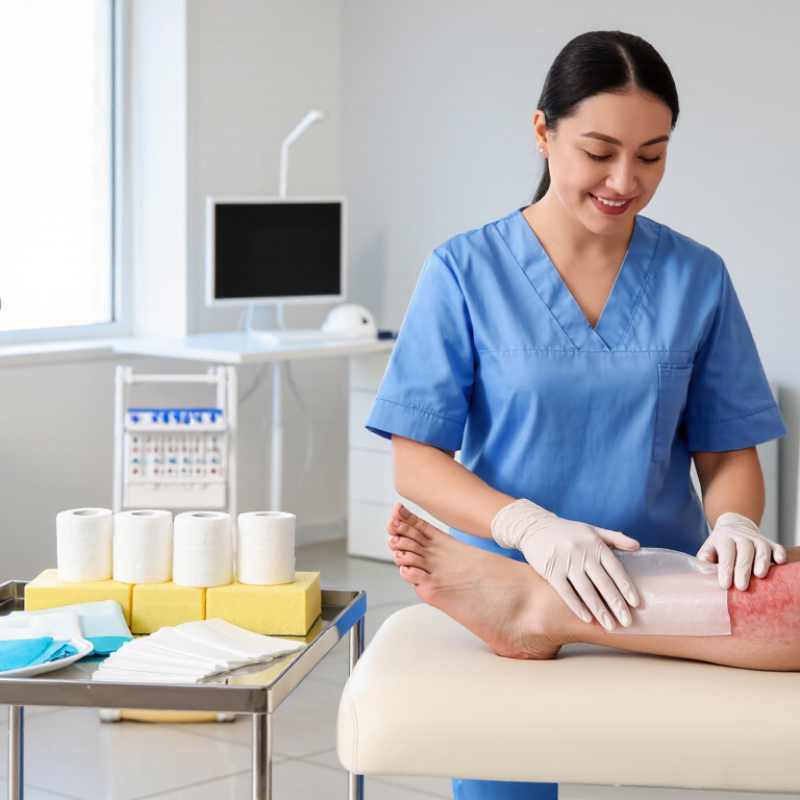
Choosing wound materials begins with identifying the wound, not reaching for a dressing. Is it pressure-related, venous, diabetic, traumatic, or surgical? Each cause changes what matters: pressure relief, moisture balance, protection, or circulation assessment. No single label tells the whole story. Note location, edges, pain, drainage, surrounding skin, and signs of infection; compare measurements over time.
Depth matters, but surface area can mislead. Record exposed tissue, undermining, tunnels, and whether bone or tendon is visible. Stage pressure injuries using current NPIAP definitions, not size alone. For diabetic foot ulcers, assess perfusion and sensation too. The IWGDF 2023 Practical Guidelines report that 19–34% of people with diabetes may develop a foot ulcer during their lifetime. Careful foot inspection is more than paperwork.
Then consider the wound bed and healing stage. A dry wound may need added moisture, while heavy drainage often calls for greater absorption and skin protection. Suspected infection or poor blood flow warrants clinical review. Recheck drainage, dimensions, pain, and surrounding skin at dressing changes. A dressing that fit last week may now trap fluid or dry the wound. It is worth questioning the first assessment; small changes are easy to miss.
Choosing advanced wound care materials starts with the wound’s current condition, not a product category. Is the surface dry, moist, or producing heavy drainage? A dry wound may need moisture support, while excess fluid can soften nearby skin and require greater absorption. That balance matters.
Depth and tissue condition also guide material choice. A shallow wound differs from a cavity with undermining or tunnels, where filling must be gentle and not packed tightly. Fragile skin may tear during dressing removal, so contact layers that reduce sticking can help. Watch the edges. Redness, warmth, increasing pain, odor, or a sudden change in drainage may signal a problem that needs clinical assessment, not simply a different dressing.
Location changes the picture. A heel exposed to pressure, a wound near a joint, and one beneath a device face different friction and movement. Materials cannot correct poor blood flow or ongoing pressure on their own. The full care plan matters. It is easy to focus on how absorbent a dressing is and overlook the skin around the wound. That deserves a second look. Reassess after changes in drainage, comfort, or wound size, and involve a qualified clinician when healing stalls or infection is suspected.
Choosing a dressing starts with the wound, not the product label. Foam dressings absorb moderate to heavy fluid and cushion areas exposed to friction, such as a heel. Hydrocolloids hold moisture and suit selected shallow wounds with light or moderate drainage. They may be a poor choice when frequent inspection is needed.
For heavier drainage, alginate or gelling fiber dressings can absorb fluid and help manage a moist wound bed. They usually need a suitable cover dressing and should not be packed tightly. Dry wounds may benefit from hydrogel, which adds moisture and can soften dry tissue. Thin films protect superficial wounds from water and friction, but they absorb little fluid. Small differences matter.
Antimicrobial dressings may be considered when infection risk or clinical findings support their use, rather than as a default. Selection also depends on wound depth, surrounding skin, pain, and how often the dressing can be changed. In practice, the neat category descriptions do not always fit a changing wound. Drainage can increase, and skin can become irritated. A clinician should reassess the wound and adjust the material when healing stalls or its condition changes.
How to Choose Advanced Wound Care Materials for Better Healing
Match Material Choices to Patient Needs and Care Setting
A dressing works best when it fits the wound and the person wearing it. Assess depth, drainage, surrounding skin, pain, and signs of infection before choosing. Foam can manage moderate fluid and cushion a sensitive area. For heavier drainage, an absorbent fiber dressing may help. A dry wound may need moisture support. No material suits every wound.
The care setting also shapes what is practical. In a clinic, staff may reassess frequently and apply products requiring specific skills. At home, patients or caregivers may need a dressing that is simple to secure, easy to obtain, and comfortable between visits. Consider dexterity, vision, mobility, supply access, and change frequency. Small details matter. A wrap that slips at the ankle can undermine an otherwise sound plan.
Check the wound at each dressing change. Note changes in drainage, odor, redness, pain, or skin moisture. Follow clinical guidance and seek qualified assessment if healing stalls or infection is suspected. Material selection is not always neat: drainage can change, and comfort may outweigh a theoretically ideal choice. Reassess and adjust when the fit is poor.
| Wound or patient need | Material option | When it may be suitable | Key considerations | Care-setting considerations |
|---|---|---|---|---|
| Superficial wound with little or no drainage; protection from friction or contamination | Transparent film dressing | May suit shallow wounds with minimal exudate, such as some superficial skin injuries. | Does not absorb meaningful amounts of drainage. Avoid using as the sole dressing for heavily exuding or clinically infected wounds. Check that the surrounding skin tolerates the adhesive. | Useful when the wound can be visually monitored without removing the dressing. In home care, ensure the patient or caregiver can recognize leakage, lifting, or skin irritation. |
| Shallow wound with low-to-moderate drainage; need for a moist healing environment | Hydrocolloid dressing | May be appropriate for selected superficial wounds, including some pressure injuries, when there is no need for frequent inspection. | Not generally appropriate for heavily exuding wounds or wounds requiring close, frequent assessment. Use caution on fragile or adhesive-sensitive skin. The gel formed beneath the dressing can have an odor when removed; assess the wound rather than relying on odor alone. | Can support longer wear between changes when clinically appropriate. Confirm that the patient or caregiver can monitor the dressing edges and report leakage or worsening symptoms. |
| Dry wound bed or wound with adherent slough where added moisture is needed | Hydrogel, often with a secondary cover dressing | May help donate moisture to a dry wound and support autolytic softening of slough when appropriate. | Provides little absorption, so it is generally unsuitable for wounds with moderate-to-heavy drainage. Reassess regularly, especially if the wound or surrounding skin becomes overly moist. | Suitable for use in clinic or at home when the care plan specifies the amount, cover dressing, and reassessment schedule. |
| Moderate-to-heavy drainage, including some cavity wounds | Alginate dressing | Absorbs exudate and forms a gel in contact with wound fluid. Some alginate dressings can also assist with minor bleeding. | Usually requires a secondary dressing. Do not use on a dry wound bed, and do not tightly pack a cavity; leave material accessible for removal and follow product instructions. | May be used in clinics, long-term care, or home care if the wound can be assessed and the packing and removal plan is clear. |
| Moderate-to-heavy drainage with a need to contain fluid within the dressing | Hydrofiber dressing | Absorbs exudate and forms a cohesive gel, which can help manage fluid in shallow or appropriately managed cavity wounds. | Typically needs a secondary cover. It is not intended for dry wounds. Follow instructions for cavity use and ensure the dressing can be removed without leaving material behind. | Useful across care settings when drainage can be monitored and the dressing-change plan is practical for the available staff or caregiver. |
| Moderate-to-heavy drainage; need for cushioning or protection from friction | Foam dressing | Can absorb exudate and provide cushioning over suitable wounds, including some pressure or leg ulcers. | Choose an appropriate absorbency and securement method. Foam does not replace pressure redistribution, compression when clinically indicated, or treatment of the underlying cause. Avoid leaving dry eschar covered without an appropriate assessment and plan. | Often practical in outpatient, long-term, and home settings. Check for strike-through, leakage, maceration, and whether the dressing remains secure during movement. |
| Fragile periwound skin or a wound that needs a non-adherent contact layer | Soft silicone contact layer, with a suitable absorbent cover if needed | May reduce trauma during dressing removal and allow drainage to pass to a secondary absorbent layer. | Provides little or no absorption by itself. Ensure the cover layer manages the exudate and that the contact layer does not obstruct drainage. | Can be helpful for patients with fragile skin or repeated dressing changes. Caregivers should be shown how to remove it gently and check the skin. |
| Wound with suspected or confirmed local infection, when an antimicrobial dressing is clinically indicated | Antimicrobial dressing, such as one containing silver or polyhexamethylene biguanide (PHMB) | May be considered as part of a broader infection-management plan after clinical assessment. | Not a substitute for diagnosis, cleansing, source control, or systemic treatment when required. Avoid routine or indefinite use; reassess response and discontinue or change the plan if there is no clear benefit within the intended review period. | Use according to local protocols and clinician direction. Ensure a defined review date and escalation plan, particularly in community settings. |
| Wound that is slow to progress despite appropriate wound-bed preparation and management of underlying causes | Collagen-based dressing or matrix | May be considered for selected wounds after assessment and correction of barriers such as pressure, poor perfusion, edema, or infection. | Does not replace debridement when indicated or treatment of the cause. Suitability depends on wound characteristics and the specific product instructions; avoid placing over an inadequately assessed wound bed. | Best selected and reviewed by a clinician familiar with the patient’s wound history and treatment goals. |
| Complex, deep wound with substantial drainage that requires controlled negative pressure | Negative pressure wound therapy (NPWT) system | May be appropriate for selected wounds under a documented clinical plan and trained supervision. | Requires careful assessment and monitoring. It is not suitable for every wound; important contraindications and precautions include untreated osteomyelitis, malignancy in the wound, and unprotected exposed vessels or organs. Follow device instructions and clinical protocols. | Usually requires trained staff, equipment support, and a reliable plan for alarms, seal failure, and urgent review. Confirm that the patient’s home or facility can safely support the system. |
Clinical note: Dressing selection should follow a full wound and patient assessment, including wound depth, tissue type, exudate, perfusion, infection risk, pain, skin tolerance, mobility, and the cause of the wound. Reassess regularly and follow local protocols and the specific dressing instructions. Seek prompt clinical review for spreading redness, increasing pain, fever, rapidly worsening tissue, or other signs of deterioration.
Material choice is not a one-time decision. At each dressing change, record wound length, width, depth, tissue appearance, edge condition, surrounding skin, and drainage. The National Pressure Injury Advisory Panel’s PUSH tool tracks wound area, exudate, and tissue type; repeated scores can show whether healing is progressing. Look at the trend. A single visit can mislead.
Match the dressing to the wound’s current condition. A wound with heavy drainage may need greater absorption, while a dry wound may need moisture support, guided by a clinician. Check the skin around the wound: pale, softened edges can signal excess moisture or leakage. Note whether the dressing stays in place and whether removal disturbs fragile tissue. If drainage rises suddenly, the wound enlarges, or new warmth and pain develop, seek clinical review rather than simply switching materials.
The International Working Group on the Diabetic Foot’s 2023 guidelines cite estimates of 18.6 million new diabetic foot ulcers worldwide each year. That scale makes consistent assessment important, but population data cannot determine an individual dressing choice. Progress is rarely linear. Recheck after adjustments, and question whether an apparent improvement reflects healing or only a temporary change in drainage.
Check the wound’s depth, drainage, surrounding skin, pain, and signs of infection. The wound’s condition matters more than the dressing category.
Foam dressings can absorb moderate fluid and cushion areas exposed to rubbing, such as a heel. Check the skin underneath, too.
Absorbent fiber or alginate dressings may help manage heavier fluid. They usually need a cover dressing and should not be packed tightly into a cavity.
Hydrogel can add moisture and soften dry tissue. But the right choice depends on the wound, not just how dry it looks.
A thin film can protect a superficial wound from water and friction. It absorbs little fluid, so it may not suit a draining wound.
A contact layer that reduces sticking may help limit skin tears. Remove dressings gently and watch for new irritation.
Consider comfort, dexterity, vision, mobility, supply access, and how often changes are needed. A slipping wrap at the ankle can disrupt a good plan.
Seek qualified assessment for increasing redness, warmth, pain, odor, or sudden drainage changes. Healing that stalls also deserves attention. Don’t just switch dressings.
Recheck the wound at each dressing change and adjust when its condition or comfort changes. The neat categories do not always fit.
Choosing advanced wound care materials begins with a careful assessment of the wound’s type, depth, and stage of healing. Consider factors such as moisture, drainage, surrounding skin, and signs of irritation or infection to determine what the dressing needs to manage. Different materials serve different purposes, including maintaining a balanced moist environment, absorbing excess fluid, protecting delicate tissue, or supporting comfort during dressing changes. Understanding what are the benefits of advanced wound care materials can help guide selection, but the most suitable option depends on the individual wound rather than a single dressing being right for every case.
Patient needs and the care setting also matter. Take into account comfort, mobility, dressing-change frequency, and whether the wound is managed at home or with professional support. As healing progresses, reassess the wound and adjust the material when its condition or needs change. Regular monitoring helps ensure the chosen dressing continues to provide appropriate protection and support throughout recovery.

Renovera Medical