As we look ahead to 2026, the question arises: what are the latest trends in wound care technology? Wound care has evolved rapidly, driven by advancements in medical technology and the rising demand for effective treatment solutions. Innovations are emerging from various sectors, including robotics, biomaterials, and telemedicine. Each development aims to enhance patient outcomes and streamline care processes.
One notable trend is the integration of artificial intelligence in wound assessment. AI algorithms help clinicians evaluate wounds accurately and recommend tailored treatment plans. This technology not only improves efficiency but also promotes personalized care. Another emerging trend is the use of smart dressings that monitor healing. These dressings track moisture and temperature, offering real-time data to healthcare providers.
Despite these advancements, challenges remain. Accessibility to high-tech solutions can be limited in rural areas. Moreover, some healthcare professionals may resist adopting new technologies. Embracing these innovations requires continuous education and training. By addressing these barriers, the wound care field can fully realize its potential in improving patient care.
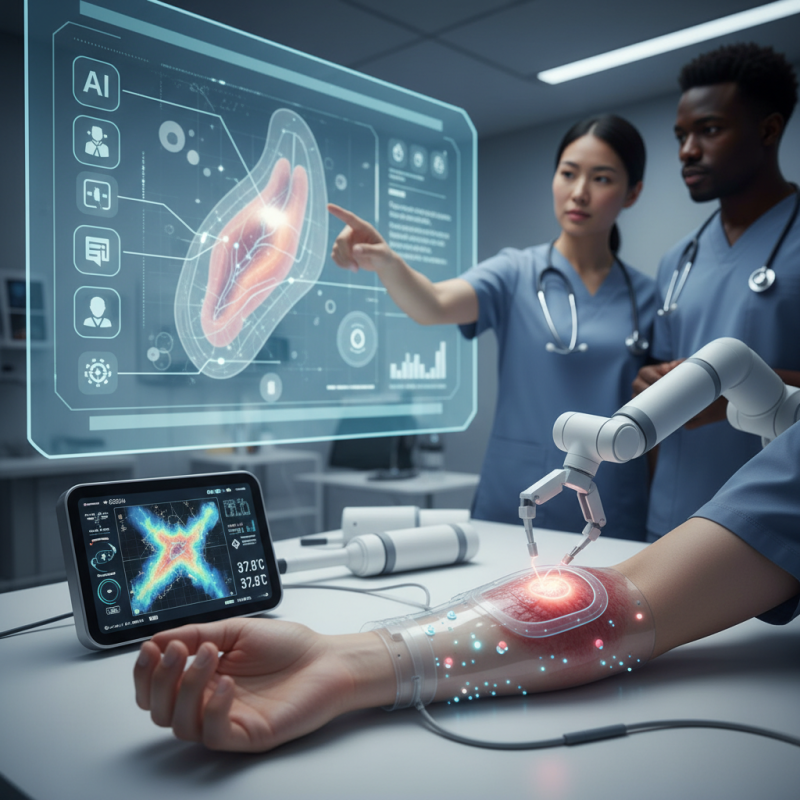
Emerging biotechnologies are transforming wound care in 2026. Advanced bioengineered materials are gaining traction. These materials mimic natural skin properties, enhancing healing processes. A recent report indicates that the global market for wound care technologies is projected to reach $20 billion by 2026, driven by these innovations.
Gene therapy is another exciting frontier. Researchers are exploring ways to use genetic modification to promote healing. By targeting specific genes, therapies can accelerate tissue regeneration. This approach could reduce recovery times significantly. However, ethical considerations surrounding gene editing remain a concern. Balancing innovation with safety is crucial.
Additionally, smart wound dressings equipped with sensors are on the rise. These dressings monitor conditions like moisture and pH. Data collected can inform healthcare providers in real-time. Yet, the integration of such technology poses challenges. Ensuring data privacy and secure communication remains imperative. The evolution of wound care technologies holds promise, but ethical and practical hurdles must be addressed.
The integration of artificial intelligence (AI) into wound management systems marks a significant evolution in wound care technology. Recent studies indicate that AI can improve clinical assessments and personalize treatment plans. A 2026 report from the Journal of Wound Care highlights that AI tools can accurately predict healing times for patients, enhancing decision-making for healthcare providers. This predictive capability is vital in managing chronic wounds, which affect 1-2% of the global population.
AI can analyze vast amounts of data swiftly. With machine learning algorithms, it assesses wound characteristics such as size, depth, and infection signs. Randomized controlled trials exhibit that AI-enabled systems can reduce healing times by up to 30%. This rapid analysis allows clinicians to focus on patient care rather than administrative tasks. However, reliance on technology raises questions about data security and algorithm bias. Ensuring these systems are transparent and equitable is essential for gaining trust in AI-driven care.
Additionally, the collaboration between AI and healthcare professionals is still developing. While AI offers insights, human judgment remains crucial. Incorporating AI into wound care should enhance, not replace, clinical expertise. There’s room for improvement in training staff on new technologies. Furthermore, ethical considerations around patient data and consent also merit attention as we embrace these new tools. The balance between AI efficiency and human oversight poses a challenge that must be navigated thoughtfully.
The field of wound care is undergoing significant transformations, especially with the rise of smart dressing materials. These advanced textiles are designed to improve patient outcomes by optimizing healing processes. Reports indicate that smart dressings can reduce healing time by up to 50% compared to traditional dressings. This remarkable improvement stems from their ability to monitor wound conditions and deliver real-time feedback to healthcare providers.
One notable feature of these materials is their ability to respond to environmental changes. Smart dressings can adjust their moisture levels based on the wound's needs. This adaptability is crucial in managing exudate and preventing maceration, a common complication in wound care. According to recent studies, 30% of wounds become infected due to improper moisture levels. Therefore, using smart materials can significantly reduce infection rates and enhance healing.
Despite these advancements, challenges remain. The integration of these technologies into everyday clinical practice needs careful consideration. Many healthcare professionals require extensive training to utilize these tools effectively. Additionally, the cost of smart dressings may limit their accessibility in some healthcare settings. Continuous research and development are essential to address these barriers and ensure equitable access to these innovative solutions.
Telehealth is transforming wound care monitoring. Patients can now receive care from home, reducing the need for frequent visits. This change offers convenience and speeds up the healing process. Remote technology enables healthcare professionals to assess wounds in real-time.
Innovative tools are becoming commonplace. Mobile applications allow users to photograph wounds and share updates with their providers. These platforms also provide educational resources on wound management.
However, the effectiveness of this approach varies among patients. Some may struggle with technology, while others might not have a stable internet connection.
Feedback from both patients and providers is crucial. Addressing challenges in remote care is essential for improvement. As telehealth continues to evolve, the focus on usability and accessibility will shape the future of wound care. Adapting to different patient needs remains a vital component of successful treatment outcomes.
Regenerative medicine has become crucial in modern wound care solutions. This approach harnesses the body's natural healing processes to improve recovery times and outcomes. Techniques like stem cell therapy and bioengineered tissues are at the forefront. They help regenerate damaged skin and tissue effectively. As a result, patients experience significant relief and faster healing.
Advanced dressings infused with growth factors mark another innovation. These dressings stimulate cell growth and attract necessary nutrients to the wound site. They create an optimal environment for healing. However, the use of these technologies brings challenges, such as ensuring consistent efficacy across different patients and wound types. Continuous research is required to address these variability problems.
Another important trend is 3D printing of customized wound dressings. This allows for tailored solutions that conform perfectly to the unique shape of a wound. Yet, the complexity of integrating this technology into everyday clinical practice remains a hurdle. There are questions about accessibility and training for healthcare professionals. Overall, while regenerative techniques show promise, ongoing evaluation and refinement are essential to maximize their potential in wound care.
| Trend | Description | Benefits | Implementation Year |
|---|---|---|---|
| 3D Bioprinting | Utilizing 3D printing technology to create skin-like structures for wound closure. | Improved healing rates, customizable grafts. | 2026 |
| Smart Wound Dressings | Dressings equipped with sensors to monitor healing progress and detect infection. | Real-time monitoring, early infection detection. | 2026 |
| Telehealth for Wound Management | Remote consultations and monitoring for wound care through telehealth platforms. | Increased accessibility, reduced travel needs. | 2025 |
| Regenerative Medicine | Use of stem cells and PRP (Platelet-Rich Plasma) to promote healing. | Enhanced tissue regeneration, faster recovery. | 2026 |
| Bioactive Wound Dressings | Dressings infused with growth factors and antimicrobial agents to accelerate healing. | Reduced healing time, lower risk of infection. | 2025 |
I enhance wound management systems?
AI can accurately predict healing times, aiding healthcare providers in decision-making.
AI-enabled systems can reduce healing times by up to 30%, benefiting patient care.
Issues like data security and algorithm bias must be addressed for trust in AI.
Human judgment remains essential despite AI insights, ensuring quality patient care.
Telehealth allows patients to monitor wounds from home, improving convenience and speeding healing.
Not all patients can effectively use technology; some may struggle with limited internet access.
Patient and provider feedback helps identify challenges and improve telehealth services.
Staff training on new technologies is crucial for effective AI application in clinical settings.
Ethical issues include patient data privacy and the need for informed consent in using AI.
In 2026, the landscape of wound care technology is undergoing significant transformation, marked by several emerging trends. Key advancements include the integration of biotechnologies, which promise to enhance wound healing through innovative biological solutions. Additionally, artificial intelligence is being incorporated into wound management systems, enabling more precise monitoring and tailored treatments for patients.
Smart dressing materials have also seen remarkable developments, offering improved features that facilitate faster healing processes. Furthermore, telehealth innovations are reshaping remote wound care monitoring, allowing health professionals to track patients' recovery from a distance. Lastly, regenerative medicine techniques are becoming integral to modern wound care solutions, focusing on the body's natural healing mechanisms. These innovations collectively answer the question of what are the latest trends in wound care technology, paving the way for more effective and personalized patient care.

Renovera Medical