In 2026, moisture balance remains a practical foundation of wound care—not a matter of simply keeping every wound wet. Too little moisture can dry the wound bed and hinder healing; too much can soften surrounding skin, leaving it pale, fragile, and vulnerable to damage. The clinical question is not just “why is moisture balance important in wound care?” It is how to maintain the right conditions as a wound changes.
The principle has deep roots. In a 1962 Nature study, researcher George D. Winter reported that “epithelialization of superficial wounds in the domestic pig was twice as rapid in a moist environment as in a dry one.” That finding helped shape modern moist wound care, though it does not mean one dressing suits every wound. Assessment matters. So do drainage, wound depth, skin condition, and signs of infection.
The financial stakes are substantial. A peer-reviewed analysis by Nussbaum and colleagues, published in Value in Health in 2018, estimated that 8.2 million Medicare beneficiaries had wounds, with annual costs ranging from $28.1 billion to $96.8 billion. Those figures cover wound care broadly, not moisture management alone. Still, they show why reliable care decisions matter. A dressing that traps excess fluid may cause trouble; one that dries too quickly may also fail. Sometimes the wound looks better, but the surrounding skin tells a different story. Maintaining balance takes regular observation, appropriate products, and adjustments as healing progresses. There is no shortcut.
How to Maintain Moisture Balance in Wound Care in 2026?
Assess the wound before choosing how much moisture to retain. Note its length, width, depth, tissue appearance, and drainage. Is the wound bed dry, lightly moist, or pooling with fluid? Look closely. Check the surrounding skin for whitening, softness, redness, or breakdown. These changes can suggest excess moisture or repeated leakage, but they should be interpreted alongside the full clinical picture.
Moisture needs vary with drainage, wound depth, circulation, swelling, infection, and the person’s overall health. Diabetes, limited mobility, and urinary or bowel incontinence can also affect skin condition and dressing choices. Guest and colleagues’ 2015 BMJ Open analysis estimated that 2.2 million people in the UK were treated for wounds during 2012–13. This figure describes the scale of wound care, not the number of wounds caused by poor moisture management. Context matters.
Record what you see, including drainage amount and changes between dressing checks. A dressing that is saturated early may signal that its absorbency or change schedule needs review. Dry, adherent tissue may call for a different approach. Reassess after treatment changes, and compare the wound and surrounding skin over time. One imperfect snapshot can mislead; trends are more useful. Seek qualified clinical assessment for worsening pain, spreading redness, fever, or rapidly changing drainage.
Cleanse the wound before choosing a dressing; debris and dried exudate can obscure the wound bed. Use a gentle flow of saline or suitable clean water, following the care plan and local clinical guidance. NICE’s 2020 pressure-ulcer guideline recommends tap water for cleansing in community settings, and sterile water or saline in acute care. Pat the surrounding skin dry with clean gauze, but avoid rubbing the wound surface. Small details matter.
A clean surface supports careful assessment of moisture, tissue, and drainage. The World Health Organization’s 2022 global report estimates that 7 in 100 patients in high-income countries and 15 in 100 in low- and middle-income countries acquire at least one healthcare-associated infection during hospital care. These figures are not wound-specific, but they underline why hand hygiene and clean technique matter. If the wound looks different, smells unusual, becomes more painful, or drains more, seek clinical advice rather than simply changing the cleansing routine. I still find it easy to focus on the dressing and overlook the skin around it.
Tips: Wash hands, prepare supplies first, and use a fresh piece of gauze for each wipe. Don’t scrub. Follow clinician instructions for deeper wounds or wounds with signs of infection.
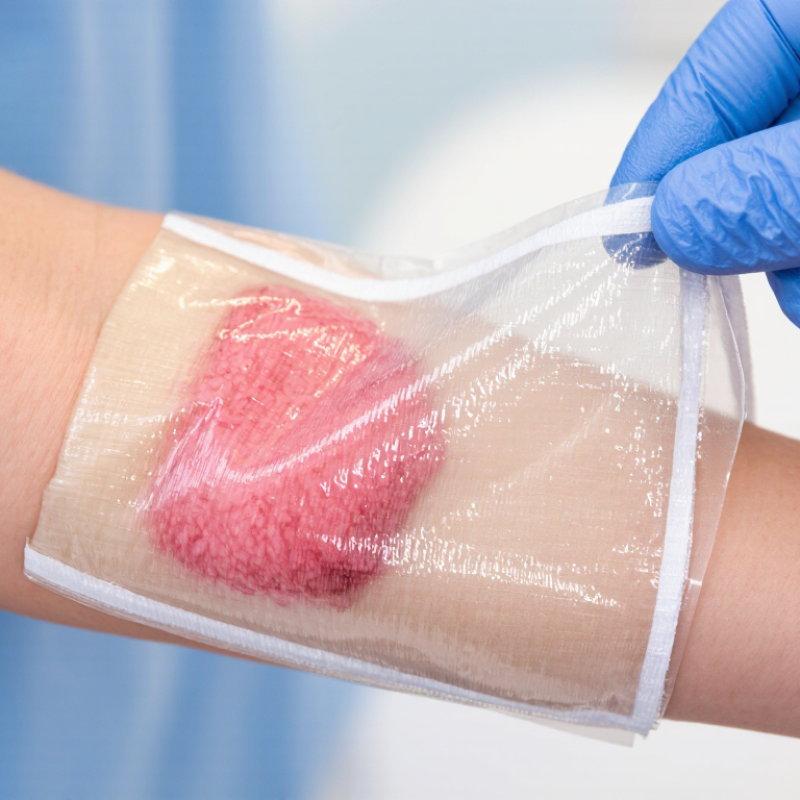
A dressing should maintain a moist wound surface while absorbing excess fluid. The goal is balance, not simply keeping the wound wet. Dressing choice depends on exudate, wound depth, surrounding skin, and the care plan. Look closely. Is the dressing dry, saturated, or leaking before the next change?
For a wound with little drainage, a moisture-donating dressing may help prevent the surface from drying out. Foam or other absorbent dressings may suit wounds producing more fluid. Product types vary, and no single dressing fits every wound. Follow the clinician’s instructions, including how often to change it; changing too rarely can leave fluid against the skin, while changing too often may disturb healing tissue.
Check the skin around the wound for whitening, softness, or irritation. These can suggest excess moisture, though appearance alone cannot confirm the cause. A dressing that repeatedly leaks or becomes soaked needs reassessment. So does a wound with worsening pain, spreading redness, warmth, or unusual odor. Seek advice from a qualified healthcare professional, especially for deep, slow-healing, or high-risk wounds. The right balance may take adjustment, and that is worth revisiting.
| Wound moisture or exudate | Dressing category to consider | Moisture-management role | Practical checks |
|---|---|---|---|
| Dry wound or very low exudate | Hydrogel, with an appropriate secondary dressing if needed | Adds moisture to help hydrate a dry wound bed; it is not intended to absorb substantial exudate. | Watch for excess moisture or soft, white, waterlogged surrounding skin (maceration). Reassess if drainage increases. |
| Low to moderate exudate; shallow wound | Hydrocolloid dressing | Maintains a moist environment and absorbs some exudate. | Check for leakage, edge lifting, or skin irritation. Seek clinical guidance for suspected infection or when the wound needs frequent inspection. |
| Moderate to heavy exudate | Foam dressing | Absorbs exudate while cushioning the wound; some versions include a backing that helps limit outside moisture. | Change when saturated, leaking, or otherwise indicated by the product instructions and care plan. Protect surrounding skin if it is exposed to drainage. |
| Moderate to heavy exudate; wound cavity may be present | Alginate or gelling-fiber dressing, with a secondary cover as directed | Absorbs fluid and forms a gel-like material as it takes up exudate; some products can be used to fill a cavity loosely. | Generally unsuitable for a dry wound. Avoid tight packing, and ensure the dressing can be removed as directed. |
| Superficial wound with minimal exudate | Transparent film dressing | Helps retain moisture and provides a barrier to external contaminants; absorbs little or no exudate. | Not suited to heavily draining wounds. Check for fluid build-up, leakage, or skin sensitivity. |
Dressing choice and change frequency depend on wound assessment, the amount of exudate, surrounding skin, and the specific product instructions. A qualified healthcare professional should assess wounds that are worsening, unusually painful, increasingly red or warm, or showing other signs of infection.
A moisture strategy should change as a wound heals, rather than follow a fixed routine. At each dressing change, note the wound’s size, drainage, color, and the condition of the surrounding skin. A healthy-looking wound bed is generally moist, not flooded; pale, wrinkled skin at the edges may suggest too much moisture, while a dry, cracked surface may need reassessment. Small details matter. A damp dressing after a quiet day is different from one soaked through in an hour.
Keep a simple record, even if it feels a little fussy. Write down when the dressing was changed and whether pain, odor, or drainage has shifted. These observations are not perfectly objective, and lighting can make color hard to judge. Still, patterns over several days can help a clinician decide whether the dressing type or change frequency needs adjustment. Follow the care plan provided for the specific wound, since needs vary by depth, location, and health conditions.
If a dressing becomes wet, dirty, loose, or saturated, follow the care instructions for changing it; there is no single schedule for every wound. Seek medical advice for spreading redness, increasing warmth or swelling, worsening pain, pus, fever, or a wound that is not improving. People with diabetes or reduced circulation should arrange professional guidance early. Don’t guess when the wound changes quickly.
Maintaining moisture balance means keeping the wound bed appropriately moist while protecting the surrounding skin. Check the dressing for strike-through, leakage, or pooling, and observe the skin around the wound for whitening, softness, redness, or irritation. These details can signal that drainage is not being managed well. Follow the patient’s care plan, and ask a qualified clinician to reassess changes that persist or worsen. Small observations matter.
Tips: Note the date and time, wound location, dressing condition, and drainage amount and appearance. Use consistent terms and measurements. A brief, clear note is more useful than a vague impression.
Document changes at each dressing assessment, using the same measuring method when possible. Record wound dimensions, tissue appearance, periwound condition, and any discomfort reported. If appropriate and permitted by workplace policy, photographs can support comparison; use consistent lighting and positioning. Describe what you see, not what you assume. I have seen small differences in wording make trends harder to follow, so records deserve a second look. Escalate new heat, spreading redness, worsening pain, odor, or sudden drainage changes according to clinical guidance. A neat dressing is not enough; the skin beneath it tells part of the story.
Debris and dried drainage can hide the wound bed. Clean skin helps you assess moisture, tissue, and drainage more clearly.
Follow the care plan and local clinical guidance. Gentle saline or suitable clean water may be recommended. Don’t scrub.
Pat the nearby skin dry with clean gauze. Use a fresh piece for each wipe. Small details matter.
There is no single schedule for every wound. Follow the specific care instructions, and change a dressing if it becomes wet, dirty, loose, or saturated.
A wound bed is generally moist, not flooded. Pale, wrinkled edges may suggest excess moisture; a dry, cracked surface needs reassessment.
Note the date, wound size, drainage, color, surrounding skin, and discomfort. Use consistent measurements. I can overlook the skin edges when focused on the dressing.
Seek advice for spreading redness, warmth, swelling, worsening pain, pus, fever, unusual odor, or sudden drainage changes. Don’t guess.
Write what you observe, not what you assume. Consistent lighting and positioning can help when photographs are appropriate and permitted. Records deserve a second look.
Maintaining moisture balance in wound care in 2026 begins with assessing the wound’s size, depth, tissue condition, drainage, and surrounding skin, while considering factors that may affect healing. Gentle cleansing helps remove debris and prepare the wound surface. The choice of dressing should then suit the wound’s moisture needs and level of exudate: enough moisture can support healing, while appropriate absorption helps prevent fluid from collecting around the wound. This explains why is moisture balance important in wound care: both excessive dryness and excess moisture can interfere with healing and damage nearby skin.
Careful monitoring is essential because a wound’s needs can change over time. Regularly check for changes in drainage, appearance, and the periwound area, then adjust the moisture strategy and dressing as appropriate. Protecting the surrounding skin and documenting observations can help identify patterns and guide consistent care. If the wound worsens or shows signs of infection, seek guidance from a qualified healthcare professional.

Renovera Medical